Thursday, October 18, 2018

Why Hazaras are Persecuted In Afghanistan Pakistan?


Afghanistan: The Massacre in Mazar-I Sharif: On August 8, 1998, Taliban militia forces captured the city of Mazar-i Sharif in northwest Afghanistan, the only major city controlled by the United Front, the coalition of forces opposed to the Taliban. The fall of Mazar was part of a successful offensive that gave the Taliban control of almost every major city and important significant territory in northern and central Afghanistan. Within the first few hours of seizing control of the city, Taliban troops killed scores of civilians in indiscriminate attacks, shooting noncombatants and suspected combatants alike in residential areas, city street sand markets. Witnesses described it as a "killing frenzy" as the advancing forces shot at "anything that moved." Retreating opposition forces may also have engaged in indiscriminate shooting as they fled the city. Human Rights Watch believes that at least hundreds of civilians were among those killed as the panicked population of Mazar-i Sharif tried to evade the gunfire or escape the city. 


The July 23rd, 2016 attack on peaceful Hazara protesters was the deadliest attack since the fall of the Taliban regime in 2001. 107 Hazaras, the majority of whom were university students, were killed and over 500 others were wounded in a double suicide attack followed by a volley of gunfire by unknown gunmen.
Although the national as well as the international media initially reported 84 were killed and over 230 wounded, as time passed it became clear that the number of casualties was significantly higher than indicated by these initial reports.
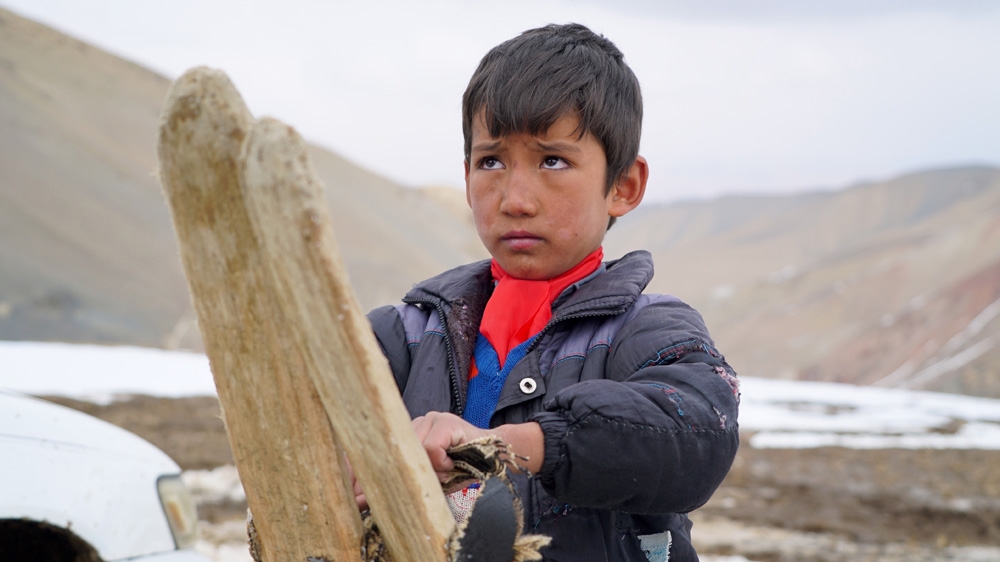
Reasons behind the protests by Hazaras:
Over the past three centuries, Hazaras have been massacred, their lands have been grabbed by numerous Afghan governments and they have been forcefully displaced. Deprived of their citizenship rights, they have been living in their homeland as if they are aliens.
Over 62 percent of Hazaras were massacred by the Afghan King Abdur Rahman Khan between the years 1890-1892, and much of their lands were seized by the Afghan government during that historical period. Currently, Hazaras live in remote, mountainous areas of central Afghanistan.  They almost always, in subsequent years, have been deprived of their due rights.

During the Taliban regime, Hazaras were massacred inhumanely in different cities such as the Kanda Pusht area of Zabul, Baghlan, Mazar-e Sharif and Bamiyan.
Based on reports by human rights organizations, the Taliban systematically massacred over 8,000 Hazaras including women and children in August 1998 during two days in Mazar-e-Sharif. In addition to several mass killings of Hazaras in Bamiyan, the Taliban also demolished the two Buddha statues of Bamiyan, which had been the most important historical and cultural symbol for Hazaras.
After the fall of the Taliban, Hazaras took part in all political and democratic procedures of the new Afghanistan state. However, systematic discrimination against them continued.
Despite the presence of the global community in Afghanistan and billions of dollars in foreign aid to the country, very few development projects were considered for Hazaristan, the Hazara-inhabited areas of the country. There are few paved roads in Hazaristan, schools of these areas are often working without buildings and students have to attend schools in open areas.
The government has not built any hospital or health center of the place where Hazaras live and the few hospitals present in Bamiyan have been built by international organizations such as the Agha Khan Foundation.
In Bamiyan, the heartland of  place, currently thousands of Hazaras live in caves where they are deprived of any services by the government.
All routes ending in this area  are considered insecure as dozens of Hazara passengers are abducted and then murdered by terrorist groups on a daily basis.
Due to the existence of such a situation, Hazaras have often staged peaceful protests against systematic discrimination over the past 14 years.
Their protests have often focused on becoming beneficiaries of the basic services which should be provided by the government to every citizen. Hazaras have repeatedly come to the streets to protest against their deprivation of security, poor roads and health and education services. However, their protests have not received adequate attention from the Afghan government and the global community.
Over the past 2 years, thousands of Hazaras were forced to leave Afghanistan, seeking asylum in western countries, as they had suffered from insecurity and the continuation of systematic discrimination in their homeland. Between the years 2014-2015 over 140,000 Hazaras had to flee from Afghanistan. They do not have any hope to live their life in Afghanistan where their lives are in constant danger.
Widespread protests following rerouting of the electricity master plan.
As discrimination against Hazaras became more widespread in 2016, a significant number of Hazara activists, especially students and academics, decided not to remain silent about discrimination anymore. In order to fight systematic discrimination, they formed small groups inside and outside Afghanistan that observed the important issues of the country and acted against discrimination and injustice.
In April of the current year, Afghan media reported a sudden change to the route of a 500 kV power transmission line originating in Turkmenistan through Salang, rather than Hazara-inhabited Bamiyan.
Based on the 20-year electricity master plan of Afghanistan prepared by a German firm named Fichtner, the line was expected to pass via Bamiyan after routing through the northern Afghan provinces. However, the Afghan government, in a hidden session on April 30, 2016, decided to route the line through Salang, rather than the impoverished Hazara-inhabited Bamiyan. While the government cited cost and length of time for construction as reasons for the change, because the Salang route incudes considerable drawbacks, it can only be supposed that the real reason for the change was discriminatory policies against Hazaras.
Following the change in the route of the line, Hazaras inside and outside Afghanistan quickly protested against the Afghan government’s decision and a blatant discrimination against Hazaras. Just a few days after the government’s decision, and following many protests which started in Bamiyan and then carried on in many cites throughout the country, thousands of educated Hazaras gathered in western Kabul in the area called Mosala of Shahid Mazari (Mosala).
In the wake of the protests which had started in Bamiyan these Hazaras formed a civil movement called the Enlightenment Movement to show their protest against the government’s decision.
The Enlightenment Movement is led by a specific group of students and academics called “The People’s High Council”.
The People’s High Council set a two-week deadline for the Afghan government to annul its discriminatory decision and to route the line through Bamiyan. They also threatened that Hazaras from all around the world, but particularly in Afghanistan would carry out acts of civil disobedience and stage protests.
After about two weeks passed, Hazaras staged a huge protest in Kabul and other provinces on May 16, 2016. Around one million people participated in a protest in Kabul in which they tried to reach the center of the city to stage a sit-in in front of the presidential palace. However, the government blocked the path to the palace by blocking roads with shipping containers. The huge crowd stayed in Dehmazang Square for hours and chanted slogans against systematic discrimination. Although the majority of protesters intended to remove the obstacles to continue their march towards the city center, the leaders of the Enlightenment Movement prevented them from doing so.
The People’s High Council to the Enlightenment Movement decided to end the protest without resorting to violence. On that day, government forces had been deployed to different parts of the city with enough equipment to suppress the protesters, leading organizers to believe there was a possible threat of bloody suppression..
Following this strategic retreat, the protests of the Enlightenment Movement continued outside Afghanistan. Hazaras in Australia, Canada, the US and different European countries staged protests against the systematic discrimination of their countrymen in Afghanistan.
During the NATO Summit in Warsaw, Poland on June 9, Hazaras from different European countries gathered and staged a widespread protest. Because of the potential embarrassment and controversy that might have been caused by the presence of Hazara protesters, the Afghan president Ashraf Ghani had to cancel his press conference as he did not have any answer for the protesters.
Following the Warsaw Summit and the Afghan government’s disgrace, protests of Hazaras continued. However, the government stubbornly neglected to pay attention to their protests. The government had over one month to enter into negotiations with protesters. Instead, by giving empty promises, authorities tried to persuade traditional Hazara leaders to leave the protesters and to end their protests.
MP Mohammad Mohaqiq, Karim Khalili former Vice President of Afghanistan and other traditional Hazara leaders initially stood with the people at the outset of the protests, but later they left the protesters and their cause, likely for reasons of political convenience. Currently Hazaras have withdrawn support for the traditional Hazara leaders. Thus, despite having lost most of their influence on the Hazara population, these leaders try to symbolically take part in decision-making by standing with the government.
Currently, a significant change has come about regarding Hazaras’ perspective of their traditional leaders. The majority of Hazaras do not want to follow their traditional leaders anymore. Instead, they support the new and educated generation in a bid to create a new leadership in the Hazara community; an innovative act which is not tolerable for both the government and Hazara traditional leaders.
The new generation of educated Hazaras have come to the political arena with a new tool as all of them are familiar with the latest political affairs and their demands are unchangeable. They know that one cannot rely on the empty promises of the Afghan government and traditional leaders. Furthermore, they try to expand the changes brought to the Hazara community among other ethnicities of Afghanistan, reaching out to activists from other ethnic communities in an attempt to build bridges.
How Hazara protesters were attacked in Kabul
An Afghan protester screams near the scene of a suicide attack that targeted crowds of minority Shiite Hazaras during a demonstration in Kabul on Saturday.
Enlightenment Movement’s public demonstration, which was to carry on for an unlimited time, started at 7 am, the 23rd of July 2016 from Dast-e-Barchi in West Kabul. Dasht-e Barchi is a Hazara majority area in Kabul.
The streets were full of protesters. Old and young women were marching in front of the protesters carrying bunches of flowers in their hands. Many children were also walking alongside them. The number of female protesters was significant. In recent years, it was the first time Kabul witnessed such a large crowd mixed of men and women in a male-dominated Afghanistan.
They had come to demand their rights and justice and stand against the systematic discrimination against a certain ethnic group. Hazaras have been discriminated against, survived massacres, and endured the most inhumane degradations over three centuries. Let’s not allow them to discriminate against and degrade our people anymore. We have a very humane demand. We will never resort to violence. We demand equal rights.”
The nightmare of the potential massacre, of the bloody crackdown, had turned real.
People were under gunfire from the surrounding buildings. The third suicide bomber was killed by police before he reached the crowd.”
Targeted and Deadly Attack
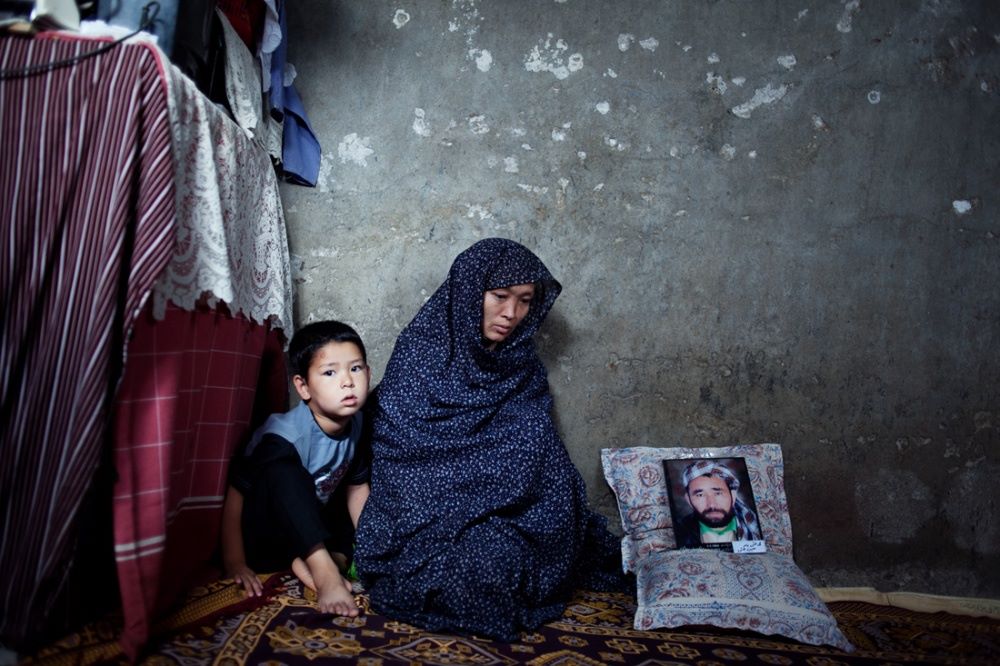
Two hours after the attack, the Afghanistan Intelligence Service, the National Directorate of Security (NDS) announced that has been carried out by Daesh, a local branch of the Islamic State, and was organized from the Achin district of Nangarhar in eastern Afghanistan.
Later Daesh (IS) announced that they had not carried out the attack on the 23rd July protesters. The surprising thing after the attack was that the Taliban followed a similar line sketched by the NDS. Strikingly, both the Taliban and NDS sent similar statements to media. Both had attempted to direct public attention to IS.
At the same time, the NDS announced that the explosive used in the attack was the type of RDX which is only accessible to the military.
Clearance of the Crime Scene
After the crowd was forced to leave, the Afghan government cleared and water-washed the scene of the tragic massacre in order not to leave any sign for later investigations about the deadly attack. This act of the government further strengthened suspicions of the government’s hand in the attack.
The day after the attack, Ashraf Ghani assigned a truth-finding commission to investigate the attack on the Enlightenment Movement’s protesters. But the Enlightenment Movement and families of the victims rejected Ashraf Ghani’s commission and asked the United Nations for an impartial investigation of the massacre of their loved ones. Hazaras suspect that this attack  targeted  them specifically, and that some of Ashraf Ghani’s government officials were behind the attack on their fellow community members.
The Afghan government is a suspect in the attack and does not have the authority and legitimacy to assign a truth-finding commission.
While the Enlightenment Movement and Hazara people have asked for a UN truth-finding commission, they set a deadline, the 40th day after the attack, which is a traditional day of remembrance for people who pass away or are killed, for the government to respond to the Enlightenment Movement’s demand positively and route the 500 kv imported power transmission line from Turkmenistan to Afghanistan according to Afghanistan Power Supply Master Plan prepared by Fechtner, the German consultancy firm, via Bamiyan and Maidan Wardak provinces.
The Twitter Storm: Social Media Campaign
After the massacre of peaceful Hazara protesters and on the burial day of victims who lost their lives, the Afghan government banned any demonstration and gathering for ten days. The government feared that the protest would spread on the burial day of the martyrs. At the same time, the government wanted to hide the extent of the tragedy by limiting people’s freedom to gather and protest and by censorship. However, Hazara youth across the world resorted to another innovative way of campaigning and raising their voices.
They decided to coordinate a twitter storm in order to raise awareness about the demands and goals of the Enlightenment Movement.
The twitter campaign was scheduled on 28 July and started at 9 am Kabul Time and continued till midnight. More than 8000 users from around the world joined the campaign with the #enlightenment hashtag. They sent more than 400,000 tweets with the #enlightenment and #EnlightenmentMovement hashtag.
The campaign sent an average of 4000 tweets per hour, and around 897 thousand twitter users per hour viewed those tweets. It was an unprecedented social media campaign in Afghanistan.
The literal meaning of their activism is that they cannot tolerate discrimination against their people anymore. They will continue their struggle until their demands are met.
The international community has also not tried to recognize the hands behind the Hazara massacre. This negligence and underestimation from the international community’s side, leaves a narrow space for a non-violent struggle against systematic discrimination.
While their peaceful protests are targeted and their screams for justice fall on deaf ears, Hazara people of Afghanistan are showing themselves to be so resilient that it will be very difficult to silence their voices any longer.
There will come the day in which our people and our peaceful struggle will be remembered and celebrated, maybe not today, but it certainly will happen. Be sure about that.

Imran backs Musharraf's referendum, party members oppose


Pakistani cricket legend-turned politician Imran Khan on Tuesday backed the referendum to be held next month to decide the future of President Pervez Musharraf but his fledgling Pakistan Tehrik-e-Insaf headed for trouble as some of its leaders have opposed it openly. After considerable dithering, Imran Khan declared that his party has decided to support Musharraf's referendum. In a statement issued from Karachi, Imran said he has decided to support the referendum as he believed that Musharraf wanted "to make Pakistan a modern Islamic, welfare state". Imran said his party wants to play its real role as "we desire that democracy is promoted in the country and a clean leadership come to the fore". Imran launched his party with a lot of fanfare in the last general elections but ended up in a great disappointment after he failed to win a single seat even though he himself contested 22 seats from different regions.

A bitter critic of former Prime Ministers Benazir Bhutto and Nawaz Sharif, Imran alleged that politicians in the country minted money through corruption during the last 12 years. The referendum has been opposed by all the major political parties including Bhutto's Pakistan Peoples Party, (PPP) and Sharif's Pakistan Muslim league (PML). While Imran announced the support to the referendum, a section of his party headed by General Secretary Miraj Muhammad Khan openly opposed the party decision to back it. Pakistan Daily quoted a party sources as saying that Miraj was bitterly critical of the party accepting the "undemocratic" move of Musharraf trying to get elected for a five year term through a referendum


Pakistan Tehrik-i-Insaaf chief Imran Khan has hailed the SC verdict on the Oct 12 change and said that it will provide the present government with an element of legitimacy. Mr Khan said the government should start the implementation of the seven-point agenda. He said it should give priority to the accountability process. It should declare casting of vote mandatory for every voter and undertake other needed electoral reforms to discourage the election of corrupt elements for parliamentary slots. He said the government should also set a limit for election expenditure. In a Press statement issued on Friday, he said after the announcement of the SC verdict the government would no longer be able to give lame excuses to the people who were waiting for positive results. He said the government should have got a vote of public confidence directly through a referendum soon after the takeover. But now the regime should fulfil its promises without any delay and work in accordance with public expectations as it has been provided a period of three years for this purpose by the Supreme Court of Pakistan. Reference: PML accepts SC verdict:


Wednesday, October 17, 2018

Dr Tahir Ul Qadri Imran Khan Dharna


EDITORIAL: Marching towards tyranny, again?Altaf Hussain, chief of the Muttahida Qaumi Movement (MQM), has appealed for a “martial law-like” intervention by “patriotic generals” against “corrupt feudals and landlord politicians”. Coming from someone whose party is known for its ethnic exclusivism — despite pretending otherwise of late– and various other crimes like land grabbing, bhatta (protection money), torturing and/or murdering dissenters, Mr Hussain’s statement could have been laughed at for its sheer absurdity. The only problem is, this is no laughing matter. When General Musharraf was in power, we witnessed a militarisation of the state and society. Because of this, the people lost respect for the army. Ever since General Kayani became the chief of army staff (COAS), he has tried to portray himself as a professional soldier with no interest in politics. Under General Kayani, the army has refurbished its image by protecting our territorial integrity and internal security, which is its primary task. Apart from fighting the Taliban, the military has been at the forefront of rescue and relief efforts during the floods. This has done the army’s image much good. On the other hand, the incompetence of the incumbent civilian democratic government is no secret; allegations of massive corruption against the government and its track record have not helped matters either. After the recent floods, despondency can be felt all over the country. It seems that the public has lost faith in the incumbents. An anti-government lobby is now trying to exploit this situation to its advantage. Thus, the MQM chief’s ‘call’ for a not-so-divine intervention by the army at this point in time may be a reflection of not just that anti-democratic lobby but some signals from the powers-that-be may also have something to do with it. The MQM came into being with the support of the intelligence agencies to counter Sindhi nationalism. Since then it accumulated more and more power and eventually got out of hand, a la the Taliban. After a few ups and downs in its relationship with its mentors, the MQM is back in the game and wants to return to the fold of the establishment. Altaf Hussain’s statement has been criticised by almost every political party. Some have even gone so far as to suggest the ultimate penalty for him since this is a clear violation of Article 6(1) of the constitution: “Any person who abrogates or attempts or conspires to abrogate, subverts or attempts or conspires to subvert the Constitution by use of force or show of force or by other unconstitutional means shall be guilty of high treason.” This may only be wishful thinking because Mr Hussain has only ‘suggested’ a military intervention while no military dictator has ever been tried under this Article even though they directly subverted the constitution. Dr Farooq Sattar has denied that his party chief has asked for a martial law; he claims that Mr Hussain has taken a bold stance and has his finger on the pulse of the public. Now this is going a bit too far because despite the public’s reservations about the incumbents, no sane person wants a return of military rule. Those who oppose democracy argue that we would be electing the same faces even if the present government completes its tenure since there is a dearth of alternatives. This is true, but if one were to rationally think about it, the only way to find new leadership is to continue with the democratic process. It would be wise if Mr Hussain could think with a cool mind instead of giving an open call to the military to seize power. Pakistan has already suffered greatly in its history by not adhering to democratic norms. Military interventions have brought nothing but pain to us and a fresh one will not bring anything new. Democracy on the other hand is a painfully slow process but to develop our institutions, there is no other alternative in sight. We should let it take its normal course instead of delving into tried and failed interventionist territory.


2007: Altaf demands demolition of Lal Masjid, Jamia Hafsa  KARACHI: Muttahida Qaumi Movement chief Altaf Hussain on Sunday demanded of President Pervez Musharraf and Prime Minister Shaukat Aziz to get Lal Masjid and the Jamia Hafsa vacated from the “Mullahs” who were trying to enforce what he called “Kalashnikov and Danda Bardar Shariah”. Addressing a huge protest rally in the evening, Altaf described it as a “tide of moderate Muslims against religious fanaticism” and warned of “Dama Dam Mast Qalandar” if the mosque and the seminary were not vacated. The rally, which was organised by the Muttahida’s Coordination Committee, started from Gurumandar and terminated at Tibet Centre. Tens of thousands of people, waving party flags and chanting slogans against “Kalashnikov and Danda Bardar Shariah”, participated in the rally. Altaf lamented that the Jamia Hafsa students and the Lal Masjid clerics were burning video cassettes shops and threatening their owners to switch over to other businesses and bullying women to give up driving. “These are not only un-Islamic but also barbaric acts,” he said, adding that “this is against the spirit of Islam, which teaches humility and tolerance.” On his call a number of religious scholars, including Aun Muhammad Naqvi, Shah Sirajul Haq Qadri, Asas Abdullah Farooqi and Alama Asad Deobandi, announced over the public address system that Islam forbids building mosques on illegally occupied land, and praying there or imparting Islamic teachings at these mosques is un-Islamic. The Muttahida chief claimed that Lal Masjid and the Jamia Hafsa are built on illegally occupied land. He asked the Ulema of different schools of thought who were present at the rally about the status of the mosque. And they said offering prayers at such places is “Haram” in Islam. Altaf said the two buildings were illegal and should be demolished. Altaf appealed to all the “Ulema-e-Haq” to appear on TV and radio and issue edicts against “Jamia Hafsa women and those masquerading as guardians of Islam at Lal Masjid.” “Had Imam Abu Hanifa, Imam Shaafai, Imam Hambal, Imam Malik or Imam Jaffar Sadiq ever used batons or swords to enforce their interpretation of the Holy Qur’aan and Hadith, he asked, and said: “There is no evidence of use of force in Islam.” The Muttahida chief said Sunday’s mammoth rally, attended by a large number of people from all over the country and Azad Kashmir, was a referendum against the “Kalashnikov and Danda Bardar Shariah”. He advised “the so-called Mullahs not to confront the Muttahida” or else “be ready to face the music”. “This is not Islamabad, this is Karachi where the 98 per cent middle class people live, and they are ready to stand up against the Kalashnikov Shariah.” He announced that the Muttahida would extend all-out cooperation to the “Ulema-e-Haq,” who would raise their voice against the “Ulema-e-Soo”. “Let me make it clear that the Muttahida is not against the Madrassas which are teaching modern technology as well as Islamic education, but we are against those seminaries which are teaching extremism and terrorism.” Referring to a pamphlet of the Lal Masjid and Jamia Hafsa, which threatened throwing acid on women who were found driving, Altaf warned that the Muttahida members would protect their mothers and sisters and cut off the hands of those who throw acid on women in Karachi. He said these Ulema wanted to push the country back to the Stone Age but the Muttahida wanted that each and every person in this country is free to acquire education — religious as well as modern technology. He criticised the Jamaat-e-Islami Amir Qazi Hussain Ahmed. For the first time Altaf referred to Naib Amir of the Jamaat-e-Islami, Professor Ghafoor Ahmed, and said he could never become the JI Amir, therefore, “I invite him to join the Muttahida”. The Muttahida chief said his party firmly believed that the minorities be considered as equal citizens of the country. 

India Vs Pakistan: How 1999 Kargil War was started and who Won it?


The men who planned Kargil military operation using Pakistan’s 80 Brigade to infiltrate Indian positions in Kargil Sector were instruments of a grand conspiracy to destabilize Pakistans political government which had defied the USA and wanted to make peace with India without US involvement ! Ambition of General Musharraf and his team while planning Kargil had infected the entire military thought process ! The Kargil plan was adventurist,superpower manipulated and its intrinsic violence penetrated and cut open the very arteries of the Pakistani state, spurting out in civil military strife and finally a military coup ! The heroes of those rocky pinnacles are all dead ! Sacrificed in vain ! Diabolically launched into the valleys of death by men who now are dead earnest to make peace with India but propelled by promiscuous and unadulterated ambition wanted to sabotage Nawaz Sharif’s Lahore Peace move in 1999 ! Once Vajpayee came to Lahore on Nawaz’s initiatiave in 1999 he was a vampire but once Musharraf went to Agra later Vajpayee was an angel ! At the super power level Kargil was planned with a view to ridicule Pakistan’s political leadership , embarrass the Pakistani prime minister and to create a civil military divide aimed at a military coup in Pakistan ! Why ! Someone may ask naievely ! Because the USA views the military junta in Third World countries as a more reliable collaborator agent of change than a prime minister who repeatedly defies US threats of retaliation and a 100 Million USD bribery offer ! Thus Kargil operation was launched with an ulterior motive to divide Pakistan’s political and military leaderships ! It is an unfortunate fact of history that Nawaz Sharif was mot aided by a good defence analyst team ! Those who were with him and supposedly considered defence experts were either in secret league with Nawaz’s handpicked military man or too naieve to understand the military intricacies of Kargil ! Kargil in the final analysis stands out as the meticulously planned conspiracy catalyst employed to trigger a chain of events that led to the primacy of the military junta on 12 October 1999 ! So far the Americans have succeeded ! The Pakistani Nuclear programme is in safe hands ! Pakistan , the beautiful woman in words of General Habibullah has sold herself to , not the highest bidder , but the only bidder at a relatively low price ! The military junta has divided the society ! Bought the pillars of state ! Balkanised the political parties ! Marginalised the society introducing unjust ethnic domination in the army , reduced the Sindhis into a political minority , pitched Punjab against Sindh by Machaievellian agreement to Thal Canal and is all set to strike a deal with India which would ensure that Pakistan’s military junta is given a permanent share in the political hierarchy simply because it is USA’s best and most reliable agent of change ! Life goes on ! Kargil stands as perhaps the final military effort on Pakistans part to settle the Kashmir dispute by military means. Analysis has mostly centred around political aspects of the operation while the military aspects have been largely left to the imagination of the public.Lately it has been claimed that Kargil was launched to bail out Mujahideen as a last resort ! This is an insult to the memory of the Pakistani armed forces "Volunteers" who died in that Himalayan wasteland without a funeral and in circumstances of unimaginable misery ! Kargil operation cannot be understood unless the personalities and motives of the principal characters are examined ! Every action in history is the final culmination of a personality's self perception,ambition and subconscious as well as conscious urges.

 In this context the Kargil operation was born out of two key factors ! One was the personality of general Pervez Musharraf and the second was the unceremonial manner in which Nawaz Sharif ousted General Jahangir Karamat Musharraf's predecessor army chief of Pakistan Army. Musharraf as those who have served with him know which includes this scribe also has always been an intensely ambitious man ! One hallmark of his personality is that he wants to stand out as a great military commander ! Propelled by an enormous ego wherever he served he endeavoured to do something extraordinary ! However fate did not allow him the glory in battle which his other coursemates like shabbir sharif achieved ! In 1965 Musharraf was a subaltern in an artillery unit which saw little action apart from supporting operatiions by indirect fire ! The 16 SP unlike 3 SP which fired on Indian tanks with direct gunsights at Chawinda stayed in conventional artillery role ! In 1971 Musharrafs commando company was not involved in action ! Nevertheless Musharraf compensated for this lack of combat laurels by achieving laurels in army courses and in various command assignments ! His final opportunity came when he ascended to the post of army chief in a situation when the army was in a subservient position vis a vis the civilian head of state , something which was regarded by the military herarchy as worse than blasphemy ! The forced retirement of General Karamat by prime minister Nawaz Sharif was regarded as a personal defeat by the Pakistani military brass and by Musharraf who felt that he would be a far weaker army chief under a strong prime minister who had asserted civilian control over the military machine ! These two factors were the fathers of the Kargil operation ! Ambition accompanied by a perception that the Pakistani public must be convinced that the soldiers were better than politicians. Kargil at the military level was the brainchild of three men i.e General Musharraf the army chief ,Aziz the then army Chief of general Staff and Mahmud the then corps commander 10 Corps ! Musharraf and Mahmud were motivated by intense ambition to achieve military glory and Aziz was motivated by his Kashmiri ancestry plus military ambition.The person they selected to execute the operation was again one distinguished by out of proportion ambition i.e Major General Javed Hassan , author of a book in 1990s that claimed that India was on its way to disintegration and in which mughal king Humayun was resurrected from the grave to fight at Second Battle of Panipat ! In November December 1998 just one month after Musharraf's elevation to the post of army chief volunteers were asked for at the army level for an operation in Kashmir ! Many thousand volunteered including both officers and men from various units ! At no stage did any Mujahideen enter Kargil ! This is a piece of fiction and has no veracity ! These were attached to NLI units in the 80 Brigade sector for training.The principal idea of the plan was to infiltrate four battalions of NLI (Northern light Infantry) stationed in 80 Brigade Sector into Kargil Heights overlooking and dominating the Srinagar Ladakh road the lone Indian link with the Siachen and Leh Sectors ! The idea being to cut the lifeline of Indian supplies to Leh and Siachen Sectors ! Indian held heights in Kargil were to be occupied in February 1999 while Indian infantry had abandoned these heights at the approach of winter snow as an annual routine since 1948.In occupying the heights no fighting was involved ! The real issue was that of supplying Pakistani troops holding these heights which was far more difficult from the Pakistani side than from the Indian side !

Islamisation of Jinnah by Ayesha Siddiqa


Punjabi jihadism has its distinctive features. Its leadership is trained in religious ideology, while its foot soldiers are divided between those that have received better schooling in government schools and those that are madrassa trained. While the bulk of the foot soldiers come from madrassas, the emphasis is on recruiting boys from government schools, who are sharper and comparatively more educated. Their education is a valuable skill for jihad. These smarter children are open to recruitment because often, they have already been partially indoctrinated by friends to militant ideology. Sometimes they are simply disgruntled: they have problems with their parents and are ready to leave home. The fresh recruits are then sent on a daura-e-aam (simple tour), which is a 21-day training course in the NWFP or Kashmir, in which they are mainly given ideological training. Those that are tempted to stay on are later dispatched on a daura-e-khaas (special tour of three to six months) in which they are taught the use of weapons and military techniques. Anyone willing to continue with jihad is then sent to another highly specialised training mission in which their threshold to resist and inflict pain is developed. This training is conducted prior to “launching” a jihadi on a particular front. It prepares the fighter, as well as a trained commando, in the art of offensive guerrilla operations and the use of military technology. During this stage, it is rumoured that trained military personnel (serving or retired) are involved, especially in the cases of the Lashkar-e-Tayyaba and Jaish-e-Mohammad. Since the training has been taking place for the past two decades, organisations also benefit from battle-hardened surviving fighters who fought in Afghanistan and on other fronts. 

Though Indian state is secular and its constitution provides equal rights to all citizens irrespective of their religion, Indian society is not at all secular. Secularism of mind takes time and the process is on. The attempts by successive political leadership in the country to integrate Indian society under a secular code are strongly resisted by Hindu extremist groups like Bharatiya Janata Party (BJP). Muslims in India favour secularism because it will ensure maximum religious freedom for them in a Hindu-dominated society. The Partition of India in 1947 triggered large-scale sectarian strife and bloodshed. Since then, India has been experiencing violence sparked off by underlying tensions between sections of the Hindu and Muslim communities. These conflicts mainly stem from the ideologies of Hindu nationalism versus Islamic extremism that exist in certain sections of the Indian population. Jinnah was secular and an honest and upright leader and politician. But, why are we following Jinnah now when he is part of history? We should look into the merits and demerits of secularism instead of bickering over what Jinnah had said in his August 11 speech. Instead of brooding on the past, we should act like a vibrant society by keeping our approach futuristic. The Objectives Resolution decided the fate of Pakistan as an Islamic country. Jinnah became irrelevant with the passage of the Objectives Resolution by the Constituent Assembly of Pakistan in 1949. The resolution, proposed by the then prime minister Liaquat Ali Khan, proclaimed that the future constitution of Pakistan would not be modelled entirely on a European pattern, but on the ideology of Islam. But most of the Islamic provisions were introduced in the 1973 Constitution and Islam became the religion of state. Till the time of President Ayub Khan, Pakistan army remained secular and it used to follow the tradition of a colonial institution. The army became religious during the Zia regime. Yes, the impression that army and religious elements are in agreement over an Islamic outlook of Pakistan is somewhat correct

Sunday, October 14, 2018

Assault on the Founder of Pakistan: The Untold Conspirac


you have no evidence at all that this man [Jinnah’s assailant] is a member of that movement [Khaksar Tehrik]’ you have no evidence that he [the culprit] is a member of the movement, still less that he holds any particular position in it.’ Justice Blagden Bombay High Court, 1943

On July 26, 1943, at approximately 1:30 pm, Rafiq Sabir Mazangavi arrived at Quaid-e-Azam Muhammad Ali Jinnah’s (Founder of Pakistan) house in Bombay and asked to meet with him. When informed of the arrival of this stranger, Jinnah emerged from the upper story of his house and came down to meet Mazangavi. Rafiq Mazangavi proceeded to attack Jinnah, and inflicted ‘minor injuries on his chin and hand.’ [2] Immediately following the incident, the assailant was alleged to be a member of the Khaksar Tehrik, a powerful movement founded by Allama Mashriqi.
The above narrative of the attack on Jinnah has been cited in many books and articles, with these works unequivocally claiming that Jinnah’s assailant was a member of the Khaksar Tehrik. But historical papers, interviews (with Mashriqi’s family, Khaksars, and others), and the political realities of the time reveal that the true nature of this assault was much different than what is reported in the literature. In fact, the truth is that the assailant had no connection with the Khaksar Tehrik, and rather had ties to Jinnah’s own All-India Muslim League. But why would a former member of Jinnah’s own organization attack him? And why would Jinnah be so adamant in attempting to implicate the Khaksar Tehrik? The answers to these questions reveal a deep-rooted conspiracy against the Khaksar Movement.
In order to understand why a conspiracy against the Khaksar Tehrik was deemed necessary, it is first important to provide some context. By the early 1940s, the Khaksar Tehrik (founded by Mashriqi in 1930 to bring freedom to British India) had become a force to be reckoned with. A private army with nearly 5 million highly disciplined members (photos of the movement can be found on Facebook under ‘Khaksar Movement in British India), the Tehrik was the only party capable of overthrowing British rule; in fact it had already nearly toppled British rule in 1940 (until Mashriqi was arrested). Nearly three years later, following Mashriqi’s release from prison and the removal of restrictions on his movements in December 1942, Mashriqi again aggressively moved to end imperial rule. Government agencies were carefully watching Mashriqi and were quite nervous about the Khaksar threat, which was apparent from the warnings they issued to Mashriqi. It was clear that Mashriqi and the Khaksars were getting close to achieving their ultimate goal. But the British Government was not the only one who felt threatened by the Khaksars’ march towards freedom. If the Khaksars were the ones to obtain freedom, this would mean the demise of all other political parties, including the All-India Muslim League, which was headed by Quaid-e-Azam Muhammad Ali Jinnah; India’s rule would then be in the hands of Allama Mashriqi. A conspiracy was thus hatched – in the form of an ‘attack’ on Jinnah – to undermine the power of Allama Mashriqi and the Khaksar Tehrik.’ A number of peculiarities regarding the attack on Jinnah support the point that there was in fact a conspiracy. First, Mazangavi came to Jinnah’s house in broad daylight armed with only a tiny knife. Second, it was highly unusual for Jinnah to meet with an unknown stranger without an appointment, yet he came down and met with Mazangavi. And perhaps most suspicious of all, Mazangavi was labeled to be a Khaksar immediately following the incident and without any proof ‘this allegation was promptly released to the news media. Jinnah did not refute the false allegation nor did he reject the wide publicity the incident was being given. Indeed, shortly after the incident, Jinnah met with the Commissioner of Police in Bombay and stated that ‘the idea [for the assault] had been planted there [in Mazangavi’s mind] by Allama Mashriqi.’ He further referred to Mashriqi as a ‘very indiscreet gentleman and also extremely pig-headed and obstinate.’ [3] Sir Reginald Maxwell (Member of Viceroy’s Executive Council) would later remark in a revealing note on August 03, 1943, ‘I think Jinnah is anxious to make the most of this attack by representing it as part of a premeditated deep plot and thus rallying Muslim support to himself.’ [4]
In the aftermath of the incident, other details surfaced that supported that there was a conspiracy against Mashriqi. One day after the incident, the Viceroy of India (Lord Linlithgow) informed the Secretary of State for India (Lord Amery) in a secret letter (on July 27, 1943) that Jinnah was only ‘slightly injured’ and that the Viceroy had “at once’ sent him a ‘telegram of sympathy.’ The Viceroy’s immediate sympathy and sense of relief for Jinnah, a supposed political opponent, raised many questions regarding their working relationship behind the scenes. While the Government’s exact role in a conspiracy is unclear, Jinnah’s side must shoulder much of the blame, as it made deliberate, direct attempts to try to implicate Mashriqi and the Khaksars.
In fact, the truth is that the assailant had no connection with the Khaksar Tehrik, and rather had ties to Jinnah’s own All-India Muslim League. But why would a former member of Jinnah’s own organization attack him? And why would Jinnah be so adamant in attempting to implicate the Khaksar Tehrik? The answers to these questions reveal a deep-rooted conspiracy against the Khaksar Movement.
To reiterate, there was absolutely no evidence to substantiate that Mazangavi was a Khaksar. In fact, the Khaksars had met with Jinnah a mere one hour after the attack to show their support. According to the Khaksars, Jinnah was in perfect mental and physical condition and showed no signs of nervousness in meeting them (which was later communicated to Allama Mashriqi). When Allama Mashriqi first heard the news of the attack, he recognized that this was a ploy by agents of imperialism (whether Muslim or non-Muslim) to damage the Khaksar Tehrik’s popularity. He was concerned that the incident could divide Muslims and derail the broader efforts toward independence. He condemned the attack, but also reminded Jinnah to maintain focus on the larger issues at hand:
“As regards the assailant being a Khaksar, it is unthinkable that Khaksars who spared Sir Sikandar Hayat Khan for three years after his massacre of them [Sir Sikandar’s men had butchered two hundred Khaksars on March 19, 1940] and were the only organisation who attended his funeral after his death, could conspire to attack Quaid-e-Azam for whom they have the greatest reverence and respect.” [5]
(In an interview with the Bombay Chronicle on July 28, 1943):
The culprit must be brought to book, but I would appeal Qaide Azam as well as everyone in India not to give this incident the slightest political tinge for the sake of the most important things that are happening and the most immense results involved. I would have taken it as a mere accident if the thing had happened with me, and perhaps would not cared to give it to the press or even get the culprit arrested, on account of the vital issues before the country. [6]
Mashriqi knew that the nation was at a critical moment in its quest for independence, and that unity between the Khaksars and the Muslim League was essential; it was important not to let the attack on Jinnah jeopardize the broader mission. But Jinnah ignored Mashriqi’s advice and instead opted to capitalize on the incident; he filed a lawsuit against the assassin in an attempt to prove that the assassin was a Khaksar. During the trial, Jinnah’s side tried to present any sort of evidence or argument that could implicate Mazangavi as a Khaksar. But its arguments did not hold any water. In fact, in a bombshell revelation during the trial, the assassin admitted that he had actually been the Propaganda Secretary of the All-India Muslim League (Lahore branch) in 1939. [7] Ultimately, Justice Blagden of the Bombay High Court did not find any validity in Jinnah’s testimony; in his decision, Justice Blagden pointed out twice that Mazangavi was not a Khaksar, stating, ‘Actually, you have no evidence at all that this man [Mazangavi] is a member of that movement [Khaksar Tehrik]’ you have no evidence that he [Mazangavi] is a member of the movement, still less that he holds any particular position in it.’ [8] Jinnah’s nephew, Barrister Akbar Peerbhoy, recounted this judgment in his book entitled Jinnah Faces An Assassin.
Thus, the facts unquestionably indicate that the attack on Jinnah was a farce and that Mazangavi was not a member of the Khaksar Tehrik. In order to cover up the truth, Justice Blagden’s court verdict was neither published nor publicized. Following the verdict, Jinnah again tried to damage the Khaksar Tehrik by calling a meeting of the All-India Muslim League, where he had a resolution passed banning Muslim Leaguers from joining the Khaksar Tehrik. This came as a blow to Muslim unity and served only to benefit the rulers and anti-Muslim elements. Meanwhile, the Khaksar Tehrik never passed any resolution banning its members from joining the Muslim League.
Nearly three years after the incident, Mazangavi came forward to reveal the truth, in letters he sent from jail to the editor of ‘Al-Islah’ (weekly newspaper of the Khaksar Tehrik, his letters appeared on March 22, 1946 and May 10, 1946 respectively). In the first letter, Mazangavi wrote, ‘[translation]’ all possible effort was made to crush your organization [Khaksar Tehrik]’ Despite the fact that’ I have never been a regular member of the Khaksar Tehrik, however, mendacious and fabricated stories were associated [with the Khaksar Tehrik] in an effort to bring a bad name to the reputation of the servants of God [Khaksars], every atrocity was inflicted upon them and continued to be meted out to ensure crushing of the Khaksar Tehrik.’ In his second letter, the assassin further wrote that Jinnah’s side made desperate efforts to prove Jinnah innocent and Mazangavi a member of the Khaksar Tehrik.
Despite the overwhelming evidence to the contrary, anti-Khaksar speakers, writers and even many known historians continue to cite Mazangavi as a Khaksar and completely ignore Justice Blagen’s decision. This can only be viewed as a deliberate attempt to alter history for vested reasons and must be corrected.
Nasim Yousaf, a grandson of Allama Mashriqi, is a scholar and historian who has presented papers at U.S. conferences and written many articles and books. He has also contributed articles to the ‘Harvard Asia Quarterly’ and the ‘World History Encyclopedia (USA).’ His forthcoming book entitled ‘Mahatma Gandhi & My Grandfather, Allama Mashriqi’ uncovers many hidden realities behind the freedom of British India.

Blasphemy Law and American Funding to Pakistani Mullahs.


ISLAMABAD: A cleric who handed over a young Christian girl to police on blasphemy charges after she burned papers containing Quranic verses said Friday what she did was a “conspiracy” to insult Muslims. Hafiz Mohammed Khalid Chishti, the imam of the mosque in the Islamabad suburb of Mehrabad, insisted he had saved the girl, Rimsha, from mob violence by handing her to police but said the incident arose because Muslims had not stopped local Christians’ “anti-Islam activities” earlier. Rimsha was arrested and remanded in custody for a fortnight last Thursday after being accused of burning pages from a children’s religious instruction book, which were inscribed with verses from the Muslim holy text. The youngster reportedly has Down’s Syndrome and her treatment has prompted outrage from rights groups and concern from Western governments, but Chishti insisted she was fully aware of what she was doing. “The girl who burnt the Holy Quran has no mental illness and is a normal girl,” Chishti told AFP. “She did it knowingly, this is a conspiracy and not a mistake. She confessed what she did.” Chishti claimed the local Christian community had previously caused antagonism by playing music in services at their makeshift church during Muslim prayer time and said burning the pages was deliberate. “They committed this crime to insult us further. This happened because we did not stop their anti-Islam activities before,” he said. “Last Christmas, they played musical instruments and there was vulgarity in the streets during our prayers time. I warned them but they did not stop.” During his sermon at Friday prayers Chishti told worshippers it was “time for Muslims to wake up” and protect the Holy Quran. Mehrabad is home to around 500 Christian families but many fled after the page-burning, fearing a repeat of a 2009 incident in Gojra, in which young Muslim radicals burned Christian houses, killing seven, after a rumour that a page from the Holy Quran had been desecrated during a wedding. 

ST (Sunni Tehrik – Sunni Movement) ———————————- 9. (S) ST is a small religious/political group with a presence in small pockets of Karachi. The group has only managed to win a handful of council seats in local elections but militarily it is disproportionably powerful because of the influx of MQM-H gunmen after the government crack-down on MQM-H (see above). ST has organized the party and its gunmen along the lines of MQM by dividing its areas of influence into sectors and units, with sector and unit commanders. ST and MQM have allegedly been killing each other’s leadership since the April 2006 Nishtar Park bombing that killed most of ST’s leadership. ST blames MQM for the attack. There appears to have been a reduction in these targeted killings since 2008.


Saturday, October 13, 2018

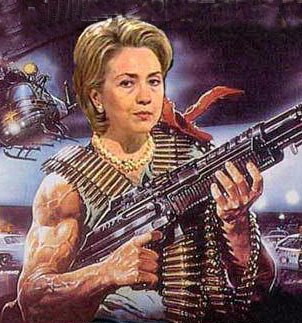
Hillary Clinton Admits We Created Taliban and Pakistan Paying the Price

Relevant article first published in June 2013.
The following video features Presidential candidate Hillary Clinton acknowledging that America created and funded Al Qaeda as a terrorist organization in the heyday of the Soviet-Afghan war:  
““Let’s remember here… the people we are fighting today we funded them twenty years ago
… let’s go recruit these mujahideen. 
“And great, let them come from Saudi Arabia and other countries, importing their Wahabi brand of Islam so that we can go beat the Soviet Union.” 
And that is precisely what the US is doing in Syria: using their Al Qaeda “Moderates” to fight against Syria and Russia. For Moscow, it is “Déjà Vu.
The plan in Afghanistan was to destroy the secular state and install a proxy U.S. Islamic State.  The same objective prevails in Syria. 
What Hillary does not mention is that at no time in the course of the last 36 years has the US ceased to support and finance Al Qaeda as a means to destabilizing sovereign countries. It was “a pretty good idea”, says Hillary, and it remains a good idea today: 
Amply documented, the ISIS and Al Nusrah Mujahideen are recruited by NATO and the Turkish High command, with the support of Saudi Arabia, Qatar and Israel. 

And Trump has endorsed US support for Al Qaeda and ISIS “rebels” in Syria. America is a state sponsor of terrorism, which uses Al Qaeda affiliated mercenaries to wage war on Syria.
US, French and Israeli operatives are fighting alongside Al Qaeda in Southern Syria.


Donald Trump, Pakistan, Afghan Jihad and other short stories


Through Vice President Mike Pence recently, the White House again warned Islamabad that it has been 'put on notice.' The report says the latest stand-off over the aforementioned Haqqani 'terrorist' might force Trump to follow through with his threats. The report observes that. until now, threats of sanctions against Pakistan have never truly been acted upon due to the support Pakistan has in the Pentagon. However, it says that may not be a factor anymore as members of Trump’s National Security Council, including National Security Adviser Lt Gen H.R. McMaster and senior director Lisa Curtis, do not have the same favourable view of Pakistan. The NYT recalls that Curtis, in particular, has been scathing in her criticism of Pakistan, going as far as suggesting in a February report she co-authored with disgraced former ambassador Hussain Haqqani that "If Pakistan did not take steps to show its commitment to America’s counterterrorism goals, Mr. Trump should strip it of its status as a major non-NATO ally." The same report, however, also mentioned the head of the Pentagon’s Central Command, Gen Joseph L. Votel, who, when quizzed about withholding Pakistan's aid, seemed to suggest that all is not lost and that a channel to work things out with Pakistan is still open. 


Thursday, October 11, 2018

Nawaz Sharif, Kargil & General Anthony Zinni.


ISLAMABAD: General Anthony Zinni, former Commander in Chief of the US Central Command, has disclosed that former prime minister Nawaz Sharif ordered the withdrawal of troops from Kargil following a US offer of a meeting with President Clinton as a face saving to the Pakistani leader. Initially reluctant to order the withdrawal before his meeting with President Clinton, General Zinni writes that after I insisted, he (Nawaz Sharif) finally came round and he ordered the withdrawal. The meeting with President Clinton was subsequently set up for July 4, Zinni discloses, writing in his book "Battle Ready", says a press release. Gen Zinni’s account belies the claim by PML-N that Nawaz Sharif did not order the withdrawal of troops from Kargil. Recounting his meetings with Pakistani leaders in the last days of June 1999, Gen Zinni says that the problem for the Pakistani leader was the apparent national loss of face. "Backing down and pulling back to the Line of Control looked like political suicide. We needed to come up with a face saving way out of this mess. What we were able to offer was a meeting with President Clinton which would end the isolation that had long been the state of affairs between our two countries, but we would announce the meeting only after a withdrawal of force," says Gen Zinni. He writes that General Pervez Musharraf, the then Chief of Army Staff who learnt of this situation, encouraged Prime Minister Sharif to hear out General Zinni. Referring to the Sharif govt as freely elected but outrageously corrupt, Gen Zinni says that "the military found itself between a rock and a hard place. But there was no way to change the situation according to the normal democratic rules." Gen Zinni writes that "Sharif set in motion his own downfall by trying to fire Gen Musharraf, while Musharraf was out of the country and to put the Chief of Intelligence in his place. He had originally given Musharraf the job under the misperception that Musharraf would be easy to control. He had not reckoned on the General’s integrity. Writing of his experiences in dealing with General Musharraf, Gen Zinni says that the two of them connected quickly and easily. He describes President Musharraf as bright, sincere and personable, a fervent nationalist who nevertheless leaned towards the West. He was as appalled as Gen Karamat, the previous Army Chief, over the ever worsening corruption within the civilian govt. Referring to his meetings with Gen Musharraf, Gen Zinni calls it a great meeting despite the chill cast by our sanctions. As I was leaving, we both agreed to stay in close touch (we exchanged our home-telephone numbers). Our friendship would later prove to be enormously valuable to both our countries

Chaudhry Nisar Ali Khan and some other party members were in favour of Pervaiz Musharaf because Musharaf has an ugly face and so he would not want to come on TV. And if a person do not want to come on TV then he will not impose Martial Law. And Nawaz Sharif went with the 2nd choice. Jang Oct 2010 Hamid Mir – 


Power of Religion & Roots of Religious Extremism - Dr. Mubarak Ali.


Generally, the domination of religion on politics takes place as a result of the weakness of the state and its institutions. When the state fails to fulfil the needs of the people and is unable to protect them against internal and external threats, religious elements who claim to establish a society based on justice, and get rid of the corrupt political set up, begin to gain power. In this case religion dominates politics and uses it as a tool for implementation of its practices. Religion gained domination over politics in two ways. In the first case, a ruler, in the interest of his rule and stability of his ruling dynasty, implemented the shariat and allowed the ulema to play a leading role in the state affairs. In the second case, the ulema, after capturing political power, established a religious state and forced people to follow their religious agenda. Such religious states, whether they were founded in the West or in the East, basically believed that human beings could be reformed only by coercion and control over their actions. Therefore, to set up a purified society, strict and exemplary punishments were given on minor crimes. It was also believed that worldly rulers were corrupt and evil-minded, therefore, only religious scholars could rule with honesty and work for the welfare of the people. One example of this type of domination is the city-state of Geneva that was established by the Christian reformer Calvin (d.1599). After acquiring political power, he was in a position to implement his religious ideals. The first thing he did was that he announced that those who were not in favour of his religious ideas should leave the city. Those who stayed back faced rigorous disciplinary action on various offences; the punishments included excommunication from Christianity, exile from the city, imprisonment, and death.

On his orders all hotels and guesthouses, which provided sexual facilities to the guests, were closed down. Those traders and shopkeepers who were found involved in cheating in quality or quantity were severely punished; vulgar songs and playing cards were prohibited. Care was taken that Bible should be available at all-important places. Those who were found laughing during a sermon were reprimanded. It was obligatory for every person to thank God before eating. As a result of these strenuous laws, the people were completely under the control and supervision of Calvin`s spiritual police. Punishments were severe and no consideration or exemption was given to anybody; for instance, once a child was beheaded because he struck his father. It is said that during the period of six years 150 heretics were burnt alive. The result was that the citizens of Geneva soon got fed up with this system, which ended after Calvin was expelled from the city.

In the Islamic world, in the 18th century a religious movement erupted in Najad and Hijaz and soon engulfed the whole region. Its founder Muhammad Ibn Abdul Wahab (d.1792) launched the campaign to purify Islam from irreligious practices. Muhammad Ibn Saud, the founder of the Saudi ruling dynasty, was influenced by his teachings; this resulted in matrimonial alliance between the two families. When Ibn Saud`s son, Saud (d.1814) established his rule he made the Wahabi religious ideas his state religion. As Wahabis believed in revivalism and purity of religion, they demolished tombs, took away religious relics which were kept there, and banned pilgrimage to shrines.

On the one hand, the Wahabis wanted to revive the ideal society of early Islam, while on the other, they destroyed all those historical monuments of the early Islamic history only because people had emotional attachment to them and regarded them as holy and sacred. They implemented strict rules and regulations for observation of religious practices as praying five times regularly and those who tried to avoid them were chased by the police and forced to go to mosques. The Wahabi model inspired religious reformers in other Muslim countries as well and a number of movements emerged to capture power and reform the society on the basis of their religious agenda. In India, the Jihad movement of Sayyid Ahmad Shahid (d.1831) followed this pattern. To fulfil his mission, he migrated from North India to North Western Frontier in order to establish his Islamic state there. In 1827, he proclaimed himself the caliph and Imam. He and his followers used all coercive methods to establish a pure and virtuous society in the frontier region.

Mirza Hyrat Dehlvi, in his book, Hyat-I-Tayyaba, writes that Sayyid sahib appointed many of his followers on important posts with the order that they should force people to follow shariat. However, these officers misused their authority and sometimes forced young girls to marry them. It was also observed that some young holy warriors forcibly took away young ladies from bazaars and streets to mosques and married them without their consent. Those officers who were appointed to look after peasants also misused their power and treated the common folk with arrogance. The result was that poor and simple villagers were fed up of them. The officers, in order to assert power, declared anybody who did not follow the instructions as kafir (non-believer). If somebody`s beard was found to be larger than the standard, the lips of that person were cut off as punishment. If somebody was found wearing tahmad (cloth to cover up lower body) below the ankles, the bones of his ankles were broken. The same happened in Afghanistan during the Taliban rule and in some altered shape in Iran, after the overthrowing of the Shah in 1989, where all coercive methods were used to implement its own version of the shariat.